Showing posts with label history. Show all posts

Saturday, April 4, 2020

Review: The Souls of Black Folk by W.E.B. Dubois

The Souls of Black Folk

W.E.B. Dubois, author of The Souls of Black Folk, was born in 1868. He earned his B.A. at Fisk University, a historically black college in Nashville, Tennessee, and went on to earn a second BA at Harvard, continuing his studies there until he earned his doctorate in history, the first African-American to earn a Ph.D. from Harvard University.

The Souls of Black Folk is a collection of essays first published together in 1903. The book includes both arguments and narrative, as Dubois draws on his own experience and that of people he knew.

One of the most famous passages introduces the idea of double consciousness, now used in sociology as a term describing the internal conflict experienced by oppressed groups:

After the Egyptian and Indian, the Greek and Roman, the Teuton and Mongolian, the Negro is a sort of seventh son, born with a veil, and gifted with second-sight in this American world, -- a world which yields him no true self-consciousness, but only lets him see himself through the revelation of the other world. It is a peculiar sensation, this double-consciousness, this sense of always looking at one's self through the eyes of others, of measuring one's soul by the tape of a world that looks on in amused contempt and pity. One ever feels his twoness, -- an American, a Negro; two souls, two thoughts, two unreconciled strivings; two warring ideals in one dark body, whose dogged strength alone keeps it from being torn asunder.

The history of the American Negro is the history of this strife, -- this longing to attain self-conscious manhood, to merge his double self into a better and truer self. In this merging he wishes neither of the older selves to be lost. He would not Africanize America, for America has too much to teach the world and Africa. He would not bleach his Negro soul in a flood of white Americanism, for he knows that Negro blood has a message for the world. He simply wishes to make it possible for a man to be both a Negro and an American, without being cursed and spit upon by his fellows, without having the doors of Opportunity closed roughly in his face.


The book is well known for its critique of Booker T. Washington. Washington was one of the most influential black leaders from the last generation of black Americans born into slavery. Washington was the main architect of the Atlanta Compromise. Dubois critiques his strategy of accommodation:

The black men of America have a duty to perform, a duty stern and delicate,—a forward movement to oppose a part of the work of their greatest leader. So far as Mr. Washington preaches Thrift, Patience, and Industrial Training for the masses, we must hold up his hands and strive with him, rejoicing in his honors and glorying in the strength of this Joshua called of God and of man to lead the headless host. But so far as Mr. Washington apologizes for injustice, North or South, does not rightly value the privilege and duty of voting, belittles the emasculating effects of caste distinctions, and opposes the higher training and ambition of our brighter minds,—so far as he, the South, or the Nation, does this,—we must unceasingly and firmly oppose them. By every civilized and peaceful method we must strive for the rights which the world accords to men, clinging unwaveringly to those great words which the sons of the Fathers would fain forget: "We hold these truths to be self-evident: That all men are created equal; that they are endowed by their Creator with certain unalienable rights; that among these are life, liberty, and the pursuit of happiness."

Dubois's prose is very quotable. I really liked these two bits from chapter twelve:

The nineteenth was the first century of human sympathy, -- the age when half wonderingly we began to descry in others that transfigured spark of divinity which we call Myself; when clodhoppers and peasants, and tramps and thieves, and millionaires and -- sometimes -- Negroes, became throbbing souls whose warm pulsing life touched us so nearly that we half gasped with surprise, crying, "Thou too! Hast Thou seen Sorrow and the dull waters of Hopelessness? Hast Thou known Life?"

Herein lies the tragedy of the age: not that men are poor, — all men know something of poverty; not that men are wicked, — who is good? not that men are ignorant, — what is Truth? Nay, but that men know so little of men.


If you, like me, have read the book but haven't read anything else by the author, you might find this lecture about Dubois's contributions to sociology interesting.

This is my book for the Back to the Classics Challenge 2020: Classic by a POC Author.

Thursday, September 5, 2019

Review: The Decline and Fall of the Roman Empire

The Decline and Fall of the Roman Empire The Decline and Fall of the Roman Empire by Edward Gibbon
My rating: 4 of 5 stars

This abridged edition (691 pages) concentrates on the centuries from the height of the Roman empire at the beginning of the second century AD to the fall of the empire in the West. It is very dense even without the footnotes (which were left out of this edition). Most of the Roman conquests were achieved under the republic, and the emperors that followed Augustus and his successors maintained the earlier expansions.

Gibbon examines contributing factors to the fall of the empire, including foreign invasions, wars, overextension of the empire, the corruption of Rome, and the growth of Christianity. The last chapter contains selections from the second half of the original work, covering the Byzantine empire, the rise of Islam, and the fall of Constantinople.

Gibbon's history is famous for its prose and character descriptions. The most enjoyable was probably the account of Commodus (kind of horrifying, but fun to read)! It is in chapter four.

Some highlights:

"The various modes of worship which prevailed in the Roman world were all considered by the people as equally true; by the philosopher as equally false; and by the magistrate as equally useful."
(Chapter 2)

"The desire of perfection became the ruling passion of their soul; and it is well known that, while reason embraces a cold mediocrity, our passions hurry us with rapid violence over the spaces which lie between the most opposite extremes." (Chapter 9)

[The destruction of Metz and other cities in the German invasion of Gaul:] "This scene of peace and plenty was suddenly changed into a desert; and the prospect of the smoking ruins could alone distinguish the solitude of nature from the desolation of man." (Chapter 15)

View all my reviews

Saturday, June 22, 2019

Review: The Histories

The Histories The Histories by Herodotus
My rating: 5 of 5 stars

This is an old review, from GoodReads. I wanted it on my blog, so I am posting it here.

“These are the researches of Herodotus of Halicarnassus, which he publishes, in the hope of preserving from decay the remembrance of what men have done, and of preventing the great and wonderful actions of the Greeks and the barbarians from losing their due meed of glory; and withal to put on record what were the grounds of feud.”

Herodotus’s reference to his “researches” (sometimes translated “inquiries”) uses the Greek word historie, from which we get “history.” This is the first recorded use of the word.

The main subject of The Histories is the twenty years (499-479 B.C.E) of war between Greece and Persia. Herodotus begins by presenting the alleged origins of enmity between Greece and Persia in mythic times. He adds Persian and Phoenician accounts that he has heard to Greek ones. These stories have to do with the abduction of women. According to the Persians, the Phoenicians began the quarrel by carrying off the Greek woman Io and taking her to Egypt. The Greeks retaliated by abducting the woman Europa from the Phoenicians, and later they carried off Medea of Colchis, which motivated Paris to abduct Helen. Herodotus says that the Persians trace their enmity toward the Greeks back to the Trojan War. The Phoenicians, on the other hand, insist that Io left willingly.

After summarizing these stories, Herodotus says that he will not discuss further which account is correct, and changes the subject to historical causes more recent than the legendary past: “I prefer to rely on my own knowledge, and to point out who it was in actual fact that first injured the Greeks…” Herodotus traces the beginning of the conflict to when Croesus of Lydia conquered the Greek towns of Asia, but Books I - IV focus on other issues. Most of this part of the book is concerned with geographical accounts, stories of notable people, and ethnographies of the peoples ruled by the Persians. Some scientific issues also come up, such as the cause of the flooding of the Nile. Starting with Book V, in which the Persians suppress the rebellion of the local Greek population in Persian territory (the Ionian Revolt) the narrative becomes more tightly focused.

Herodotus is a moralist; he presents the story of the Persian Wars as a story of how the hubris of the Persian rulers leads to their defeat, and demonstrates how “the god with his lightning smites always the bigger animals, and will not suffer them to wax insolent… likewise his bolts fall ever on the highest houses and the tallest trees” (Bk VII).

The website Livius.org has commentaries that I found really helpful when I was reading this.
http://www.livius.org/articles/person...

The website also has an interesting essay, “The Significance of Marathon” on the historiography of the battle of Marathon, which occurs in Book VI.

“It is often said that the battle of Marathon was one of the few really decisive battles in history. The truth, however, is that we cannot establish this with certainty. Still, the fight had important consequences: it gave rise to the idea that East and West were opposites, an idea that has survived until the present day, in spite of the fact that 'Marathon' has become the standard example to prove that historians can better refrain from such bold statements.”

Some great reviews by other readers on GR:

https://www.goodreads.com/review/show...

https://www.goodreads.com/review/show... (this one’s pretty funny)

some highlights:
Bk I: The story of Croesus & Solon & Cyrus - The wealthy king of Lydia, Croesus, urges Solon, the Athenian lawgiver [magistrate] to admit that he is the happiest of men. (Croesus at this point as captured nearly all the Greek towns along the west coast of Asia.)

Solon warns him that no one can be called happy until he ends his life well. “Call him, however, until he die, not happy but fortunate. Scarcely, indeed, can any man unite all these advantages: as there is no country which contains within it all that it needs, but each, while it possesses some things, lacks others, and the best country is that which contains the most; so no single human being is complete in every respect — something is always lacking. He who unites the greatest number of advantages, and retaining them to the day of his death, then dies peaceably, that man alone, sire, in my judgment, is entitled to bear the name of ‘happy.’ But in every matter it behooves us to mark well the end: for oftentimes God gives men a gleam of happiness, and then plunges them into ruin.”

Croesus dismisses Solon’s answer, “since he thought that a man must be an arrant fool who made no account of the present good, but bade men always wait and mark the end.”

Croesus suffers for his arrogance when his son Atys is accidentally killed in a boar hunt. Croesus later attacks Cappadocia, part of the empire of Cyrus the Great (and part of modern Turkey). In the conflict that follows, Cyrus captures the city of Sardis. Croesus's other son is killed in the fighting, trying to protect his father, and Croesus is captured. Croesus tells Cyrus the story of Solon's warning to him years before, and how everything had turned out exactly as Solon had said, although it was nothing that especially concerned him, but applied to all mankind alike, and most to those who seemed to themselves happy... Then Cyrus, hearing what Croesus had said, relented, bethinking himself that he too was a man, and that he was a fellow man, and one who had once been as blessed by fortune as himself, that he was burning alive; afraid, moreover, of retribution, and full of the thought that whatever is human is insecure. So he bade them quench the blazing fire as quickly as they could, and take down Croesus and the other Lydians, which they tried to do, but the flames were not to be mastered.”

Croesus prays to Apollo and a rainstorm extinguishes the flames. Cyrus, “convinced by this that Croesus was a good man and a favourite of heaven” asked him after he was taken off the pile, "'Who it was that had persuaded him to lead an army into his country, and so become his foe rather than continue his friend?' 'What I did, oh! king, was to thy advantage and to my own loss. If there be blame, it rests with the god of the Greeks, who encouraged me to begin the war. No one is so foolish as to prefer war to peace, in which, instead of sons burying their fathers, fathers bury their sons. But the gods willed it so.”

Bk II: Herodotus’s story about Indian burial customs:

“… if one were to offer men to choose out of all the customs in the world as seemed to them the best, they would examine the whole number, and end by preferring their own; so convinced are they that their own usages surpass those of all others. Unless, therefore, a man was mad, it is not likely that he would make sport of such matters. That people have this feeling about their own laws may be seen by many proofs; among others, the following. Darius, after he had got the kingdom, called into his presence certain Greeks who were at hand, and asked -- 'What he should pay them to eat the bodies of their fathers when they died?' To which they answered, that there was no sum that would tempt them to do such a thing. He then sent for certain Indians, of the race called Callatians, men who eat their fathers, and asked them, while the Greeks stood by, and knew by the help of an interpreter all that was said -- 'What he should give them to burn the bodies of their fathers at their decease?' The Indians exclaimed aloud, and bade him forbear such language.”

Bk III: Sosicles of Corinth’s response to the Spartans, who at this point in the narrative plan to reinstate a tyrant in Athens. Sparta’s allies are skeptical of the plan, but only Sosicles the Corinthian argues against it:

“Surely the heaven will soon be below, and the earth above, and men will henceforth live in the sea, and fish take their place upon the dry land, since you, Lacedaemonians [another name for the Spartans] propose to put down free governments in the cities of Greece, and set up tyrannies in their room. There is nothing in the whole world so unjust, so bloody, as a tyranny. If, however, it seems to you a desirable thing to have the cities under despotic rule, begin by putting a tyrant over yourselves, and then establish despots in other states… If you knew what tyranny was as well as ourselves, you would be better advised than you now are in regard to it.”

Sosicles then tells of how Corinth was once ruled by an oligarchy, before it became democratic.

Bk VII: The battle of Thermopylae
“And now there arose a fierce struggle between the Persians and the Lacedaemonians over the body of Leonidas, in which the Greeks four times drove back the enemy, and at last by their great bravery succeeded in bearing off the body. This combat was scarcely ended when the Persians with Ephialtes approached; and the Greeks, informed that they drew nigh, made a change in the manner of their fighting. Drawing back into the narrowest part of the pass, and retreating even behind the cross wall, they posted themselves upon a hillock, where they stood all drawn up together in one close body, except only the Thebans. The hillock whereof I speak is at the entrance of the straits, where the stone lion stands which was set up in honour of Leonidas. Here they defended themselves to the last, such as still had swords using them, and the others resisting with their hands and teeth; till the barbarians, who in part had pulled down the wall and attacked them in front, in part had gone round and now encircled them upon every side, overwhelmed and buried the remnant which was left beneath showers of missile weapons.

Thus nobly did the whole body of Lacedaemonians and Thespians behave; but nevertheless one man is said to have distinguished himself above all the rest, to wit, Dieneces the Spartan. A speech which he made before the Greeks engaged the Medes, remains on record. One of the Trachinians told him, ‘Such was the number of the barbarians, that when they shot forth their arrows the sun would be darkened by their multitude.’ Dieneces, not at all frightened at these words, but making light of the Median numbers, answered ‘Our Trachinian friend brings us excellent tidings. If the Medes darken the sun, we shall have our fight in the shade.’ ”


Bk VIII: Xerxes reflects on the passage of time:
“And now, as he looked and saw the whole Hellespont covered with the vessels of his fleet, and all the shore and every plain about Abydos as full as possible of men, Xerxes congratulated himself on his good fortune; but after a little while he wept.

Then Artabanus, the king’s uncle (the same who at the first spake so freely against the king, and advised him not to lead his army against Greece) when he heard that Xerxes was in tears, went to him, and said: ‘How different, sire, is what thou art now doing, from what thou didst a little while ago! Then thou didst congratulate thyself; and now, behold! thou weepest.’

‘There came upon me,’ replied he, ‘a sudden pity, when I thought of the shortness of man’s life, and considered that of all this host, numerous as it is, not one will be alive when a hundred years are gone by.’

‘And yet there are sadder things in life than that,’ returned the other. ‘Short as our time is, there is no man, whether it be here among this multitude or elsewhere, who is so happy, as not to have felt the wish — I will not say once, but full many a time — that he were dead rather than alive. Calamities fall upon us; sicknesses vex and harass us, and make life, short though it be, to appear long. So death, through the wretchedness of our life, is a most sweet refuge to our race; and God, who gives the tastes that we enjoy of pleasant times, is seen, in his very gift, to be envious.’”
 

View all my reviews

Monday, April 8, 2019

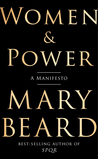
Review: Women & Power: A Manifesto

Women & Power: A Manifesto Women & Power: A Manifesto by Mary Beard
My rating: 5 of 5 stars


Mary Beard is a professor of classics at the University of Cambridge. This is a short book with two lectures by her on the subject of women's participation in politics and public life. I will not try to give a comprehensive summary, but here is a quick look at each of them.

The first one is "The Public Voice of Women," which examines how women's voices have been ignored in the public sphere. Here is the beginning:

I want to start near the beginning of the tradition of Western literature, and its first recorded example of a man telling a woman to shut up; telling her that her voice was not to be heard in public. I am thinking of a moment immortalized at the start of Homer's Odyssey, almost 3,000 years ago... Penelope comes down from her private quarters into the great hall of the palace, to find a bard performing to throngs of her suitors; he is singing about the difficulties the Greek heroes are having in reaching home. She isn't amused, and in front of everyone asks him to choose another, happier number. At which point young Telemachus intervenes: "Mother, " he says, "go back to your quarters, take up your own work, the loom and the distaff ... will be the business of men, but me most of all."

The second lecture, "Women in Power," examines the portrayal of powerful women in history and literature. Beard argues that "our mental, cultural template for a powerful person remains resolutely male." This one is maybe a bit more wide-ranging than the first lecture; it opens with a discussion of Herland by Charlotte Perkins Gilman, which I have not read, and discusses examples of sexism in myth, popular culture, and history.

View all my reviews

Thursday, March 28, 2019

Review: Galileo's Daughter: A Historical Memoir of Science, Faith and Love

Galileo's Daughter: A Historical Memoir of Science, Faith and Love Galileo's Daughter: A Historical Memoir of Science, Faith and Love by Dava Sobel
My rating: 5 of 5 stars

I think I prefer this book to Longitude: The True Story of a Lone Genius Who Solved the Greatest Scientific Problem of His Time, which is also a good book, but not quite as captivating.

Galileo's oldest child, born of his illicit liaison with the beautiful Marina Gamba of Venice, was thirteen years old when he placed her at the Convent of San Matteo in Arcetri. He never married her mother, so he thought that the girl would be unmarriageable. Her given name was Virginia (after Galileo's sister), but when she became a nun, she adopted the name Maria Celeste, a name inspired by her fathers work in astronomy (as in celestial).

She was part of the Order of St. Clare, a contemplative order of nuns known as the Clarrises, or the Poor Clares. The order was named for the first female follower of St. Francis of Assisi. She initiated the tradition of work in the convents, filling the hours between daily offices with spinning and embroidery. The rules of the order enforced a very ascetic existence even compared to other convents, as all Poor Clares were dependent on alms. Galileo frequently sent financial assistance to the convent, but it was still a very difficult way to live. The book includes many excerpts from Maria Celeste's letters to her father, of which 124 letters survive. Although they wrote to each other frequently, Galileo's side of the correspondence has not been preserved.

Galileo began his career as a professor of mathematics, but the work in astronomy for which he is best known began when, in 1609, he became the first person to point a telescope skyward. The telescope revealed previously unseen features on the moon, a closer view of the Milky Way than could be seen with the naked eye (revealing its dense clusters of stars), and the first four moons of Jupiter. For these discoveries, he won appointment as chief mathematician and philosopher at the court of Cosimo de Medici in 1610. He published a book, The Starry Messenger, describing his observations. It sold out within a week of publication.

In letters to his former student Benedetto Castelli and to the Duchess Christina (daughter of Charles III of Lorraine) Galileo explained why he thought that the heliocentric view of universe was not in conflict with scripture. The first letter became widely circulated and a Dominican friar who heard about it, Tommaso Caccini, arrived at the Inquisition's offices in Rome to denounce Galileo for heresy. At the end of 1615, Galileo traveled to Rome hoping to clear his name of the suspicion of heresy.

In 1616, Galileo was warned to curtail his studies of the motions of heavenly bodies and told that the subject was best left to the fathers of the Church. For seven years he obeyed, turning his attention to other issues, such as using the moons of Jupiter to calculate longitude and developing a compound microscope with which he observed insects.

In 1623 a new pope, Pope Urban VIII, took office. Galileo knew him personally; he had demonstrated his telescope to him and discussed the physics of floating bodies with him at a banquet at the Florentine court. So Galileo hoped that under the new pope, he would be allowed to return to the study of astronomy, and he decided to proceed with his plans to write a book on the two rival theories of cosmology, the sun-centered and the earth-centered. This book was the Dialogue Concerning the Two Chief World Systems, published in 1632.

The following year, Galileo was brought in for questioning by the Inquisition. He was tried and convicted of heresy, imprisoned, and eventually released under a revised sentence of house arrest. He then sold his home in Tuscany in order to move closer to the Convent of San Matteo and serve his time under house arrest there, but a few months later she fell ill and died of dysentery at the age of 34.

I really enjoyed this, mostly for the narrative itself, but also because of the author's narration, which includes asides like this one on Galileo's experiments:

Although this account reveals stunning experiments that promise to open a new window on philosophy, Salviati cannot be shaken from his recently acquired pedantic monotone, which threatens to establish an irreparable split, if not between science and religion, then between science and poetry.

I listened to most of this on audio, but I also had a library copy of the ebook, both checked out from OverDrive.

View all my reviews

Saturday, March 23, 2019

Book Beginnings & The Friday 56: Galileo's Daughter (+Book Blogger Hop)


Book Beginnings is hosted by Rose City Reader. The weekly post goes up every Thursday and bloggers can add their links all week.


Today I am featuring my current audiobook, Galileo's Daughter: A Historical Memoir of Science, Faith and Love by Dava Sobel. It begins with a letter from Galileo's oldest daughter, born of his affair with Marina Gamba of Venice. In the letter, she offers her condolences for the death of his sister (her aunt). The letter is dated the 10th of May, 1623, and written from her convent in San Matteo.

"Most Illustrious Lord Father 

We are terribly saddened by the death of your cherished sister, our dear aunt; but our sorrow at losing her is as nothing compared to our concern for your sake, because your suffering will be all the greater, Sire, as truly you have no one else left in your world, now that she, who could not have been more precious to you, has departed, and therefore we can only imagine how you sustain the severity of such a sudden and completely unexpected blow." 

This is the first of 124 letters from their correspondence. Her name was Virginia, and she adopted the name Maria Celeste when she became a nun, "in a gesture that acknowledged her father's fascination with the stars."
"She alone of Galileo's three children mirrored his own brilliance, industry, and sensibility, and by virtue of these qualities became his confidante." 

For the Friday 56, I am sharing a snippet from 56% in the audiobook. Galileo's attempts to get his Dialogue Concerning the Two Chief World Systems approved for publication are interrupted by the arrival of the Black Death, as the deadly plague that had spread through Milan and Turin over the past year moved south to invade the city of Florence." 

The Friday 56 is hosted by Freda's Voice


Tuesday, November 13, 2018

Review: Eichmann in Jerusalem: A Report on the Banality of Evil

Eichmann in Jerusalem: A Report on the Banality of Evil Eichmann in Jerusalem: A Report on the Banality of Evil by Hannah Arendt
My rating: 5 of 5 stars

Read for the Back to the Classics Challenge 2018
Category: Read a book that scares you

"It is true that the totalitarian state tried to establish these holes of oblivion into which all deeds, good and evil, would disappear, but just as the Nazis’ feverish attempts, from June, 1942, on, to erase all traces of their massacres—through cremation, through burning in open pits, through the use of explosives and flame-throwers and bone-crushing machinery—were doomed to failure, so all efforts to let their opponents 'disappear in silent anonymity' were in vain. The holes of oblivion do not exist. Nothing human is perfect, and there are simply too many people in the world to make oblivion possible. One man will always be left alive to tell the story. Hence, nothing can ever be ‘practically useless’—at least, not in the long run. It would be of great practical usefulness for Germany today, and not merely for her prestige abroad but for her sadly confused inner condition, if there were more stories like Schmidt’s to tell. For the lesson of such stories is simple and within everybody’s grasp.

Politically speaking, it is that under conditions of terror most people will comply but
some people will not,just as the lesson of the countries to which the Final Solution was proposed is that 'it could happen' almost anywhere but it did not happen everywhere. Humanly speaking, no more is required, and no more can reasonably be asked, for this planet to remain a fit place for human habitation."

Hannah Arendt’s study of the trial of Adolf Eichmann, one of the major organizers of the Holocaust, first appeared as a series of articles in The New Yorker in 1963. Arendt revised the book and added a postscript in 1964. The first few chapters and the last few chapters of the book are specifically about Eichmann’s trial, but the book also covers the prewar years in Germany, the Wannsee Conference, and the response of the European countries to Nazi demands to deport their Jews. Arendt writes that Denmark, alone of all the countries in Germany’s sphere of influence, contested the policy of deportation.

Italy, despite its formal alliance with Germany, protected most of its Jews by bureaucratically sabotaging its own official compliance:"The gentlemen of the Foreign Office could not do much about it, because they always met the same subtly veiled resistance, the same promises and the same failures to fulfill them. The sabotage was all the more infuriating as it was carried out openly, in an almost mocking manner."

Arendt’s analysis of Eichmann makes it clear that he did not see himself as merely an obedient bureaucrat (“he remembered perfectly well that he would have had a bad conscience only if he had not done what he had been ordered to”) but she did not think that he was driven by a deep personal belief in antisemitism, either. She portrays him as an ambitious person who wanted to be part of some grand project. His indifference to the content of that project, as he avoided thinking about it too hard, lead a particularly destructive version of the common impulse to be part of something larger than yourself.

I didn’t do much background reading, but this article in The Nation is a very interesting look at the book’s critical reception.

Despite all the efforts of the prosecution, everybody could see that this man was not a 'monster,' but it was difficult indeed not to suspect that he was a clown. And since this suspicion would have been fatal to the whole enterprise, and was also rather hard to sustain, in view of the sufferings he and his like had caused so many millions of people, his worst clowneries were hardly noticed. What could you do with a man who first declared, with great emphasis, that the one thing he had learned in an ill-spent life was that one should never take an oath ('Today no man, no judge could ever persuade me to make a sworn statement. I refuse it; I refuse it for moral reasons. Since my experience tells me that if one is loyal to his oath, one day he has to take the consequences, I have made up my mind once and for all that no judge in the world or other authority will ever be capable of making me swear an oath, to give sworn testimony. I won't do it voluntarily and no one will be able to force me'), and then, after being told explicitly that if he wished to testify in his own defense he might ‘do so under oath or without an oath,’ declared without further ado that he would prefer to testify under oath?

View all my reviews

I Have Moved to WordPress!

 I will see if I can update my links for FrightFall #Readathon and I think I might leave the blog up (why not?) but future posts will be at ...