Wednesday, August 26, 2020

Minireviews: The Drawing of the Dark/Haroun & the Sea of Stories/Hyperion/The Einstein Intersection

       
The Drawing of the Dark by Tim Powers *** 3 stars

This is one of Tim Powers's early novels and the first of his secret histories: several books with the shared premise that something supernatural is going on behind the scenes of history as we know it. It is set before and during the 1529 Siege of Vienna. Irishman Brian Duffy is working as a "bouncer" at an inn there when the siege begins. The first few chapters really drew me in, but the middle drags a bit (it is much shorter than Declare but doesn't feel like it) and the book as a whole didn't really come together for me. I might give The Anubis Gates another try (I didn't finish that one) and I want to try The Stress of Her Regard at some point. I was much more impressed with Declare (my review).

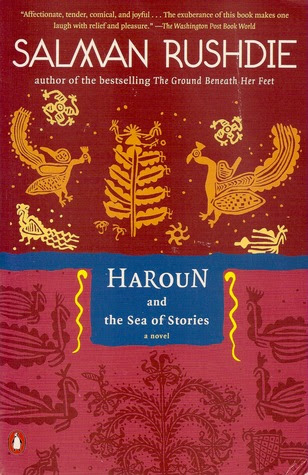
 Haroun and the Sea of Stories by Salman Rushdie *** 3 stars

A reread of a book I first read in 2012. I probably won't read it a third time but it was fun to revisit this. Haroun & the sea of stories begins in the country of Alifbay in a city ”so ruinously sad that it has forgotten its name.” Haroun is the only child of the storyteller Rashid Khalifa, and one day his father gets up in front of a huge audience, opens his mouth, and finds that he has run out of stories to tell. Harun sets out to fix that and discovers that the source of all stories is endangered by the villain Khattam-Shud, the Arch-Enemy of All Stories. 


Hyperion by Dan Simmons *** 3 stars

A Hugo Award Winner (1990) about six people on a journey to the planet Hyperion. In the style of the Canterbury Tales, each character tells a story explaining why they are going to Hyperion. I liked the scholar and the poet best I think. And maybe the detective. The soldier's tale is the only one that didn't really do much for me. The book has frequent allusions to John Keats, including the poem Hyperion, which is based on the lost epic poem the Titanomachy, which is about the struggle of the Olympian gods to overthrow their predecessors the Titans. That gave me a hint about some of the things that happen in the book. I don't like it enough to read the sequel right away but I will probably try it at some point.

People disagree about whether to stick with the first book, stop after the second book or read the whole series. 


I think I liked the other Delany books I have read better (Babel-17 and The Ballad of Beta-2 / Empire Star).

Here is what Neil Gaiman said about it in The Sandman Companion:
"My original plan [for The Song of Orpheus] was to do the equivalent of a series of jazz riffs, all on Orphic themes, spinning off of stories precisely like The Einstein Intersection. It would have been much weirder and more interesting than what I ended up writing." He says he kept hearing that people weren't familiar with the original story, so the story he wrote for Sandman was a more literal retelling.

Huh. Now that I've read The Einstein Intersection I can say that knowing the Orpheus story ahead of time (I finally read Metamorphoses in its entirety last year) didn't help. I will probably read something else by Delany someday (maybe Tales of Nevèrÿon but I am not a huge fan of his so far.

I listened to the audiobook read by Stefan Rudnicki from the library service hoopla digital. This book won the 1967 Nebula Award for Best Novel.


Review: Julian Comstock: A Story of 22nd-Century America (repost from GoodReads 2017)

Julian Comstock: A Story of 22nd-Century America Julian Comstock: A Story of 22nd-Century America by Robert Charles Wilson
My rating: 5 of 5 stars

This is a great adventure story - funny, dramatic, and bittersweet - and my favorite SF novel that I've read this year. The old-fashioned tone is completely convincing and switches easily between humorous moments and serious ones. The exposition is really well done, in such a way that it's probably quite accessible to people who don't read much SF (although it doesn't seem to be well known enough to get much of that readership).

Set a century and a half after a combination of peak oil + disease + economic collapse reduces modern civilization to Civil-War-level tech, this book takes place in a future North America where Canada is part of the United States, the presidency has become dynastic and is ruled by the Comstock family, and true political power is in the hands of the religious authority known as the Dominion. The post-apocalyptic society in the book emulates the 19th century, but it has all the American 19th century's flaws, without some of its key virtues; the actual 19th century was a time of overall progress, while the society in the book is clearly in decline. Oh, and the United States is at war with the Dutch over control of the Northwest Passage.

The narrator, Adam Hazzard, is a young writer. Adam makes friends with the president's nephew, Julian Comstock, whose life is loosely inspired by the life of Julian the Apostate. They get conscripted into the army while Julian is hiding his identity. Eventually Julian becomes a war hero and at the celebrations that follow, his actual identity is disclosed.

This review says that "Wilson himself described it by saying he was reading a US Civil War memoir called “Frank on a gunboat” and thought that was good as far as it went, but it would be better if it was Julian the Apostate on a gunboat and that's what this book is." Like the historical Julian, his goal is to reintroduce earlier traditions, but in this case, that means reimposing separation of church and state as public policy. Also, he wants to make a film about Darwin.

Along with Eifelheim Michael Flynn and Doomsday Book by Connie Willis this is one of the better science fiction books I've read that deals with religion although this one is coming at it from the other (irreligious) side. I loved everything about it and I will definitely read it again someday. 

“You must not make the mistake of thinking that because nothing lasts, nothing matters.”

There's an interesting interview with the author here
.


View all my reviews

Review: 2312 (repost from 2016 on GoodReads)

2312 2312 by Kim Stanley Robinson
My rating: 5 of 5 stars

2312 is a future history in which new habitats have been created throughout our solar system, on Mercury, Venus, Mars, several of Jupiter’s moons, Saturn and its moons, and inside many asteroids. Much of the plot revolves around the mystery of a series of terrorist attacks in the solar system, but the book has a very meandering pace and spends a lot of time focusing on other things. The book is a slowly developing romance between Swan Er Hong, from Mercury, and Wahram, from Iapetus, one of Saturn’s terraformed moons. (Robinson is having some fun with personality types here, as Swan is a mercurial character and Wahram is, well, saturnine… Swan was a hard character to like at times, but they’re both interesting and I loved reading about them.)

2312 takes a pretty balanced view of the future, and avoids the extremes of apocalyptic pessimism or shiny techno-utopia. The regular chapters are interspersed with various lists (written by Swan) fake nonfiction extracts that describe the colonization of the solar system, and stream of consciousness sections. I loved it; there aren't a whole lot of writers who can make exposition a pleasure to read, but Kim Stanley Robinson is one of them.

The descriptions of the settlement of the solar system are extremely detailed and clearly well researched. Much of the book takes place in Terminator, a moving city on Mercury. Terminator moves around Mercury on train tracks at the speed of the planet’s rotation, never staying in one place long enough to be scorched by Mercury’s dawn. The opening chapter describes the sunwalkers who come to Mercury to watch the sunrise.

Besides the colonization of space, the book examines body modification, the potential future of AI, and environmental issues. Swan has undergone several modifications of her body and brain, including having parts of animal brains implanted in her head so that she can whistle like a bird, implanting a quantum computer in her head, and modifying her reproductive organs so that she can both mother and father children. She has also ingested alien bacteria discovered in the oceans of Enceladus, one of Saturn's moons. (The AI developments in this book provide background for the more advanced quantum computer AI in Aurora.)

Earth is almost an ice-free planet but the terraforming techniques used off-planet usually won’t work on the already inhabited Earth:. "no slamming comets into it, for instance. So they bubbled their ship wakes with surfactants to create a higher albedo, and tried various levels of sulfur dioxide injected into the stratosphere, imitating volcanoes; but that had once led to disaster, and now they couldn’t agree on how much sunlight to block… no, Earth was a mess, a sad place. And yet still the center of the story. It had to be dealt with, as Alex had said, or nothing done in space was real."

I will definitely reread this book (and Aurora) but I want to read some of Kim Stanley Robinson’s other books first, especially The Wild Shore and its sequels The Gold Coast and Pacific Edge.

my favorite quotes:

"… as the sunwalkers stand on their points and watch, it’s not uncommon for devotees to become entranced by something in the sight, some pattern never seen before, something in the pulse and flow that snags the mind; suddenly the sizzle of the fiery cilia becomes audible, a turbulent roaring— that’s your own blood, rushing through your ears, but in those moments it sounds just like the sun burning. And so people stay too long. Some have their retinas burned; some are blinded; others are killed outright, betrayed by an overwhelmed spacesuit. Some are cooked in groups of a dozen or more. Do you imagine they must have been fools? Do you think you would never make such a mistake? Don’t you be so sure. Really you have no idea. It’s like nothing you’ve ever seen. You may think you are inured, that nothing outside the mind can really interest you anymore, as sophisticated and knowledgeable as you are. But you would be wrong. You are a creature of the sun. The beauty and terror of it seen from so close can empty any mind, thrust anyone into a trance."

"To simplify history would be to distort reality. By the early twenty-fourth century there was too much going on to be either seen or understood. Assiduous attempts by contemporary historians to achieve an agreed-upon paradigm foundered, and we are no different now, looking back at them. It’s hard to even assemble enough data to make a guess."

"[The sky] looked like a blue dome flattened at the center, perhaps a few kilometers above the clouds — she reached up for it — although knowing too that it was just a kind of rainbow made it glorious. A rainbow that was blue everywhere and covered everything. The blue itself was complex, narrow in range but infinite within that range. It was an intoxicating sight, and you could breathe it — one was always breathing it, you had to. The wind shoved it into you!"

"Here they were, on the only planetary surface on which you could walk freely, naked to the wind and the sun, and when they had a choice, they sat in boxes and stared at littler boxes..."

"Sometimes I think it's only post-scarcity that evil exists. Before that, it could always be put down to want or fear. It was possible to believe, as apparently you did, that when fear and want went away, bad deeds would too. Humanity would be revealed as some kind of bonobo, an altruistic cooperator, a lover of all."

"All landscape art reminds us: we live in a tabula rasa, and must write on it. It is our world, and its beauty is entirely inside our heads."

"Io, the innermost moon of Jupiter, a big as Luna. They yellow slag world, awesome upchucking of a moon's guts, regurgitation overland over until everything more volatile than sulfur has long since burned off. Sulfur, sulfur everywhere, and nary a place to stand. Four hundred live volcanoes bursting through the slag like angry boils, geysering sulfur dioxide hundreds of kilometers into the air… The hard crust on its surface, cooled only by contact with the chill vacuum of space, is so thin that in many places it would not support a standing person. Some early explorers found this out the hard way: walking too far away from their lander, they plunged through the sulfurous ground into red-hot lava and disappeared.

We think that because we live on cooler planets and moons, we live on safer ground than that. But it is not so."


View all my reviews

Review: Doomsday Book (repost from 2016 on GoodReads)

Doomsday Book Doomsday Book by Connie Willis
My rating: 4 of 5 stars

I found out about this book when GoodReads recommended it after I added To Say Nothing of the Dog. I hadn’t realized it was part of a series. Doomsday Book is the first book in Connie Willis’s Oxford Time Travel series, which is about historians at a near-future version of Oxford University who use time travel as part of their research. It won both the Hugo and the Nebula Awards for Best Novel in 1992.

This novel is a drama with some moments of comic relief, while To Say Nothing of the Dog is a comedy with some dramatic moments. Kivrin, an Oxford student studying medieval history, prepares to visit the fourteenth century. She is supposed to be sent to the year 1320 — but something goes wrong. She ends up in 1348 instead, shortly before Christmas…. which happens to be right before the Black Death arrives in England. Back in modern times, a dangerous strain of flu hits Oxford University. As the faculty tries to figure out what went wrong with Kivrin’s assignment and how to rescue her, they must address a crisis in their own time as well.

The only real complaint I have is about the modern-day section. This was written in 1992, so I can’t really blame Willis for not predicting that there would be cell phones in her near-future setting, but there were definitely answering machines in major institutions in 1992, and there aren’t any here. It’s hard to ignore because much of the plot revolves around telephone communication. But that's a minor thing, and it's an excellent book otherwise.

"Mr Dunworthy had told her it wouldn’t be anything like she imagined, and he was right, of course. But not about this mass. She had imagined it just like this, the stone floor and the murmured Kyrie, the smells of incense and tallow and cold."

"They’ve all died, she thought, and couldn’t make herself believe it. They’ve all been dead over seven hundred years."

"Are these the last days, the end of the world that God’s apostles have foretold?"
Yes, Kivrin thought. "No," she said. "No. It’s only a bad time. A terrible time, but not everyone will die. And there will be wonderful times after this. The Renaissance and class reforms and music. Wonderful times. There will be new medicines, and people won’t have to die from this or smallpox or pneumonia. And everyone will have enough to eat, and their houses will be warm even in the winter." She thought of Oxford, decorated for Christmas, the streets and shops lit. "There will be lights everywhere, and bells that you don’t have to ring."

"I wanted to come, and if I hadn’t, they would have been all alone, and nobody would have ever known how frightened and brave and irreplaceable they were."

"Most of it was terrible," she said softly, "but there were some wonderful things."


View all my reviews

Monday, August 24, 2020

Review: The Obelisk Gate

The Obelisk Gate The Obelisk Gate by N.K. Jemisin
My rating: 4 of 5 stars 
Synopsis from GoodReads: This is the way the world ends... for the last time.

The season of endings grows darker as civilization fades into the long cold night. Alabaster Tenring – madman, world-crusher, savior – has returned with a mission: to train his successor, Essun, and thus seal the fate of the Stillness forever.

It continues with a lost daughter, found by the enemy.

It continues with the obelisks, and an ancient mystery converging on answers at last.

The Stillness is the wall which stands against the flow of tradition, the spark of hope long buried under the thickening ashfall. And it will not be broken.  

I'm afraid this book suffers a little from being the second book in a trilogy. There is a great deal of exposition here and for some reason, I didn't find those sections as engaging to read as in the first book. I will reread The Stone Sky soon (probably some time in the next few weeks) but I hope I don't forget anything important, because some of the details of the setting just didn't stick in my head the way they have with other books. (I am one of those people who loved all the footnotes in Jonathan Strange & Mr. Norrell, so I can really get into this sort of thing with the right book.)

This book is told from three perspectives: Essun, Nassun, and Schaffa. Most of that slightly frustrating exposition is in Essun's chapters. Essun spent most of the first book searching for her daughter, and in this book we find out where she is: her father Jija took her to a community called Found Moon hoping to cure her orogeny. Nassun's chapters have a lot more dramatic tension than Essun's, and we learn a lot about her difficult relationship with her both her parents. I liked having Schaffa's point of view; in the first book he's almost a villain but I had some sympathy for him here. 

This is a tricky book to review because there are some things I'd like to discuss (mostly related to the ruthlessness of the characters) that would involve spoilers. I never discuss spoilers in reviews but for The Stone Sky I might have to. I'll figure out what to do about that when I read it, I guess. 

Some of my favorite quotes:
”But if you stay, no part of this comm gets to decide that any part of this comm is expendable. No voting on who gets to be people.”  

”It's not hate that you're seeing. Hate requires emotion. What this woman has simply done is realize that you are a rogga, and decide that you aren't a person, just like that.”


View all my reviews

Thursday, August 20, 2020

Bout of Books: Master Post (updated)

I signed up on GoodReads


The  Obelisk Gate by NK Jemisin (The Broken Earth Trilogy #2) 87-100% (ebook)

The Lais of Marie de France translated by David Slavitt - pages 219-327 finished! (page numbers on phone) (ebook)

Hyperion by Dan Simmons (Hyperion Cantos, #1) 482 pgs (ebook)

I'm not sure if I will finish:

The Diamond Age: Or, A Young Lady's Illustrated Primer by Neal Stephenson 37% read

Black Amazon of Mars by Leigh Brackett 15% (LibriVox)   

TBR:

The Einstein Intersection by Samuel R Delany (audio - hoopla digital with library acct)

Brown Girl in the Ring by Nalo Hopkinson (print - public library)

8/24/2020:

I finished The Einstein Intersection and wrote about it here; I probably won't write a full review

I started The Road to Wigan Pier by George Orwell and Le Morte d'Arthur by Sir Thomas Malory  

I read Bartleby the Scrivener 

I re-read Aldarion and Erendis from Unfinished Tales by JRR Tolkien (expect a post about this sometime next month when I've reviewed the books I finished this week) 

I will have some reviews up soon!


Wednesday, August 12, 2020

Top Ten Tuesday: Books I Loved but Never Reviewed


I will probably review all of these eventually, but for now, I have included the blurbs (mostly from GoodReads)   

 Tolkien & the Great War

“To be caught in youth by 1914 was no less hideous an experience than in 1939 . . . by 1918 all but one of my close friends were dead.” So J.R.R. Tolkien responded to critics who saw The Lord of the Rings as a reaction to the Second World War. Tolkien and the Great War tells for the first time the full story of how he embarked on the creation of Middle-earth in his youth as the world around him was plunged into catastrophe. This biography reveals the horror and heroism that he experienced as a signals officer in the Battle of the Somme and introduces the circle of friends who spurred his mythology into life. It shows how, after two of these brilliant young men were killed, Tolkien pursued the dream they had all shared by launching his epic of good and evil.

This is the first substantially new biography of Tolkien since 1977, meticulously researched and distilled from his personal wartime papers and a multitude of other sources.

John Garth argues that the foundation of tragic experience in the First World War is the key to Middle-earth's enduring power. Tolkien used his mythic imagination not to escape from reality but to reflect and transform the cataclysm of his generation. While his contemporaries surrendered to disillusionment, he kept enchantment alive, reshaping an entire literary tradition into a form that resonates to this day.

Small Gods

One of my favorite books in the Discworld series! This one can be read alone, although there are a few connections to other books in the series. I loved this,  but I need to reread it in order to review it. 

‘Just because you can’t explain it, doesn’t mean it’s a miracle.’

On the Discworld, religion is a controversial business.

Everyone has their own opinion, and indeed their own gods, of every shape and size, and all elbowing for space at the top. In such a competitive environment, shape and size can be pretty crucial to make one’s presence felt.

So it’s certainly not helpful for the Great God Om to find himself in the body of a tortoise, a manifestation far below god-like status in anyone’s book.

In such instances, you need an acolyte, and fast. Brutha, the novice, is the Chosen One – or at least the only one available. He wants peace and justice and brotherly love. He also wants the Inquisition to stop torturing him now, please…

The Discworld novels can be read in any order but Small Gods is a standalone novel.

Nation

Another of my favorite Pratchett books! This one is not part of the Discworld series.
 
Alone on a desert island — everything and everyone he knows and loves has been washed away in a storm — Mau is the last surviving member of his nation. He’s completely alone — or so he thinks until he finds the ghost girl. She has no toes, wears strange lacy trousers like the grandfather bird, and gives him a stick that can make fire. Daphne, sole survivor of the wreck of the Sweet Judy, almost immediately regrets trying to shoot the native boy. Thank goodness the powder was wet and the gun only produced a spark. She’s certain her father, distant cousin of the Royal family, will come and rescue her but it seems, for now, that all she has for company is the boy and the foul-mouthed ship’s parrot, until other survivors arrive to take refuge on the island. Together, Mau and Daphne discover some remarkable things (including how to milk a pig, and why spitting in beer is a good thing), and start to forge a new nation.

Encompassing themes of death and nationhood, Terry Pratchett’s new novel is, as can be expected, extremely funny, witty and wise. Mau’s ancestors have something to teach us all. Mau just wishes they would shut up about it and let him get on with saving everyone’s lives. 


Lud-in-the-Mist


Lud-in-the-Mist, the capital city of the small country Dorimare, is a port at the confluence of two rivers, the Dapple and the Dawl. The Dapple has its origin beyond the Debatable Hills to the west of Lud-in-the-Mist, in Fairyland. In the days of Duke Aubrey, some centuries earlier, fairy things had been looked upon with reverence, and fairy fruit was brought down the Dapple and enjoyed by the people of Dorimare. But after Duke Aubrey had been expelled from Dorimare by the burghers, the eating of fairy fruit came to be regarded as a crime, and anything related to Fairyland was unspeakable. Now, when his son Ranulph is believed to have eaten fairy fruit, Nathaniel Chanticleer, the mayor of Lud-in-the-Mist, finds himself looking into old mysteries in order to save his son and the people of his city.

The Broken Sword   

Thor broke the sword Tyrfing to save the roots of Yggdrasil, the tree that binds earth, heaven and hell. Now the elves need the weapon for their war against the trolls. Only Scafloc, a human kidnapped and raised by elves, can hope to persuade Bolverk the ice-giant to make Tyrfing whole again. But Scafloc must also confront his shadow self, Valgard, the changeling in his place among men. 

The King of Elfland's Daughter

One of the great early fantasies; I read this years ago and found it enchanting, so I want to read it again someday. 

The poetic style and sweeping grandeur of The King of Elfland's Daughter has made it one of the most beloved fantasy novels of our time, a masterpiece that influenced some of the greatest contemporary fantasists.
 

The Years of Rice & Salt by Kim Stanley Robinson

It is the fourteenth century and one of the most apocalyptic events in human history is set to occur - the coming of the Black Death. History teaches us that a third of Europe's population was destroyed. But what if? What if the plague killed 99 percent of the population instead? How would the world have changed? This is a look at the history that could have been: a history that stretches across centuries, a history that sees dynasties and nations rise and crumble, a history that spans horrible famine and magnificent innovation. These are the years of rice and salt. 

The  Once & Future King by T.H. White

I loved this but have never reviewed it; I will definitely have to reread it and write about it sometime.

T.H. White’s masterful retelling of the saga of King Arthur is a fantasy classic as legendary as the sword Excalibur and city of Camelot that are found within its pages. This magical epic takes Arthur from the glorious lyrical phase of his youth, through the disillusioning early years of his reign, to maturity when his vision of the Round Table develops into the search for the Holy Grail, and finally to his weary old age. With memorable characters like Merlin and Owl and Guinevere, beasts who talk and men who fly, wizardry and war, The Once and Future King has become the fantasy masterpiece against which all others are judged, a poignant story of adventure, romance, and magic that has enchanted readers for generations.
Pilgrim at Tinker Creek by Annie Dillard  

a brilliant essay collection! 

An exhilarating meditation on nature and its seasons—a personal narrative highlighting one year's exploration on foot in the author's own neighborhood in Tinker Creek, Virginia. In the summer, Dillard stalks muskrats in the creek and contemplates wave mechanics; in the fall she watches a monarch butterfly migration and dreams of Arctic caribou. She tries to con a coot; she collects pond water and examines it under a microscope. She unties a snake skin, witnesses a flood, and plays 'King of the Meadow' with a field of grasshoppers. 

War and the Iliad by Simone Weil & Rachel Bespaloff

War and the Iliad is a perfect introduction to the range of Homer’s art as well as a provocative and rewarding demonstration of the links between literature, philosophy, and questions of life and death.

Simone Weil’s The Iliad, or the Poem of Force is one of her most celebrated works—an inspired analysis of Homer’s epic that presents a nightmare vision of combat as a machine in which all humanity is lost. First published on the eve of war in 1939, the essay has often been read as a pacifist manifesto. Rachel Bespaloff was a French contemporary of Weil’s whose work similarly explored the complex relations between literature, religion, and philosophy. She composed her own distinctive discussion of the Iliad in the midst of World War II—calling it “her method of facing the war”—and, as Christopher Benfey argues in his introduction, the essay was very probably written in response to Weil. Bespaloff’s account of the Iliad brings out Homer’s novelistic approach to character and the existential drama of his characters’ choices; it is marked, too, by a tragic awareness of how the Iliad speaks to times and places where there is no hope apart from war.

This edition brings together these two influential essays for the first time, accompanied by Benfey’s scholarly introduction and an afterword by the great Austrian novelist Hermann Broch.

I Have Moved to WordPress!

 I will see if I can update my links for FrightFall #Readathon and I think I might leave the blog up (why not?) but future posts will be at ...